Many of the most serious adverse drug reactions are not caused by a drug damaging tissue directly. They happen when a drug changes how the immune system behaves. Understanding the cells that drive inflammation is therefore one of the most useful foundations a drug safety scientist can have.
My master's thesis at the University of Basel focused on one of those cells: the macrophage. In this article I explain why macrophages matter for drug safety and what laboratory work on them teaches about recognising immune-mediated harm.
Why immune-mediated reactions are hard to predict
Classical toxicity is usually dose-dependent and predictable from a drug's pharmacology. Immune-mediated reactions are different. They can appear at therapeutic doses, affect only a small subset of patients, and show up days or weeks after the first exposure (Uetrecht & Naisbitt, 2013).
Examples range from mild drug rashes to severe cutaneous reactions such as Stevens–Johnson syndrome, drug-induced liver injury with an immune component, and cytokine release after biologic therapies. Many of these reactions are rare. They are often detected only after a medicine reaches the market and thousands of patients have been treated (Edwards & Aronson, 2000).
This is where pharmacovigilance and immunology meet. A safety team that understands the underlying biology can recognise patterns in case reports earlier and assess them more convincingly.
The macrophage: sensor, amplifier and regulator
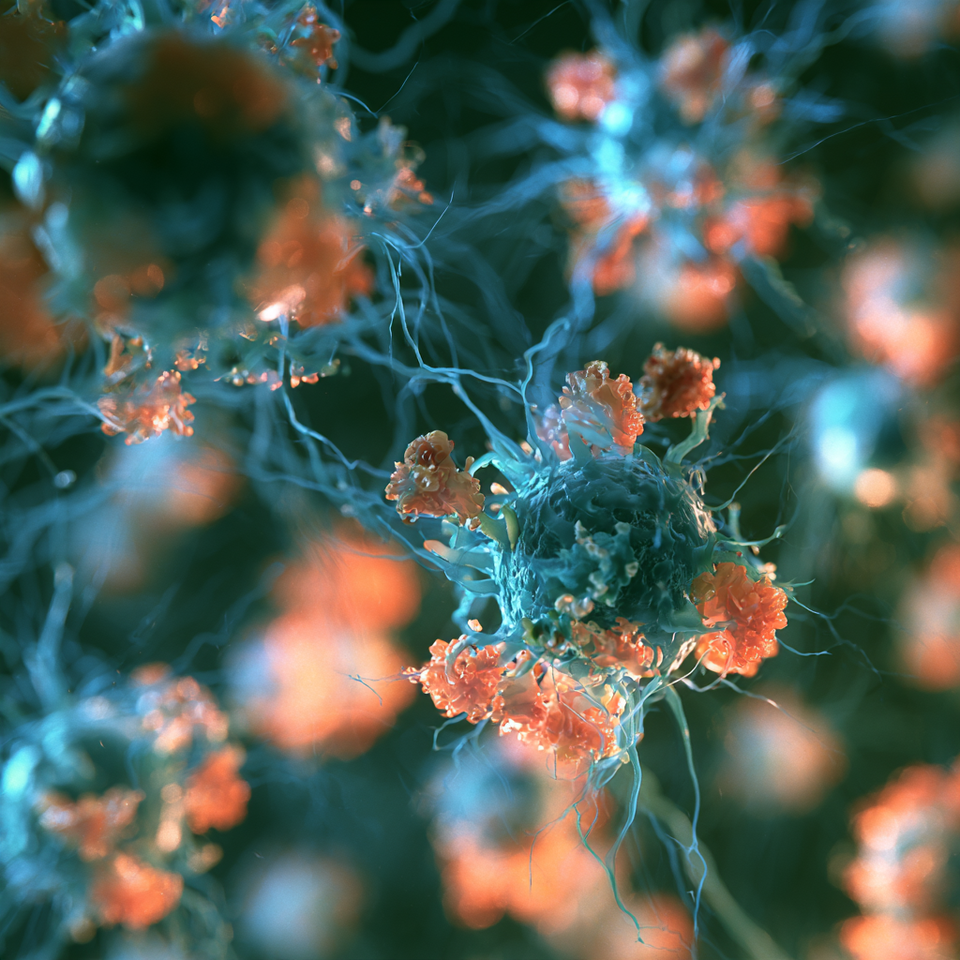
Macrophages sit in almost every tissue. They detect danger signals, release cytokines that recruit other immune cells, and help resolve inflammation once the threat has passed (Murray & Wynn, 2011).
In the lab, a standard way to study this is to stimulate macrophages with lipopolysaccharide (LPS), a component of bacterial cell walls. LPS activates the TLR4 receptor and triggers a strong pro-inflammatory response (Akira & Takeda, 2004). Adding a pharmacological agent to this system shows whether the drug amplifies, dampens or redirects that response.
In my thesis, carried out in the Zampieri Lab, I investigated exactly this: how pharmacological agents change macrophage inflammatory and metabolic behaviour after LPS stimulation. I measured cytokine release with ELISA and profiled cellular metabolism with flow-injection mass spectrometry (FIA-MS).
Inflammation is also a metabolic event
One of the most important insights from the field of immunometabolism is that activated macrophages rewire their metabolism. After LPS stimulation they shift towards glycolysis and partially break their TCA cycle (O'Neill et al., 2016).
That shift is not a side effect. Metabolites such as succinate can stabilise the transcription factor HIF-1α and drive production of the inflammatory cytokine IL-1β (Mills et al., 2017). Other metabolites, such as itaconate, act as brakes on inflammation (Mills et al., 2017; O'Neill et al., 2016).
For drug safety, this has a practical consequence. A drug that alters cellular metabolism, for example by affecting mitochondria, can change how strongly the immune system reacts, even if the drug was never designed to act on immune cells.
What this teaches a drug safety scientist
Working on this question taught me three lessons that apply directly to safety assessment and pharmacovigilance.
- Mechanism makes signals credible. When a cluster of case reports suggests an immune-mediated reaction, a plausible biological mechanism strengthens the case for a real signal. Knowing which pathways a drug can touch helps a reviewer decide what to investigate first.
- Readouts must be combined. Cytokine levels alone show that a response changed. Metabolomic data helps show why. In the same way, a safety assessment is stronger when it combines clinical case data, literature and nonclinical findings.
- Context changes the answer. A drug may look harmless in resting cells but behave differently in cells that are already activated. Patients with infections or inflammatory diseases may therefore be at different risk from healthy volunteers.
From the lab bench to the patient
Before my master's degree I worked for several years as a hospital and community pharmacist, and I still practise in a Swiss community pharmacy. In practice, immune-mediated reactions rarely look dramatic at first. A patient mentions a rash, unusual tiredness or a fever a week after starting a new medicine.
The pharmacist's job is to take that seriously, document it clearly and escalate it. My research gave me a deeper understanding of what might be happening behind such a report, and why careful documentation of timing, dose and concomitant medicines matters so much for the later causality assessment.
Why this matters for industry
The pharmaceutical industry is developing more immunomodulating therapies than ever: monoclonal antibodies, bispecifics, cell therapies and small molecules targeting immune pathways. Each of these brings its own immunosafety questions, from first-in-human dosing to long-term post-marketing surveillance.
Teams working on these products need people who can connect clinical observations, regulatory requirements and the underlying biology. My path from the pharmacy counter to the immunopharmacology lab has given me that combined perspective.
Key takeaways
- Immune-mediated adverse reactions are often idiosyncratic and detected only after market authorisation.
- Macrophages are central to inflammation, and their metabolism helps determine how strongly they respond.
- Combining mechanistic understanding with careful case documentation leads to better safety decisions.
References
Akira, S., & Takeda, K. (2004). Toll-like receptor signalling. Nature Reviews Immunology, 4(7), 499–511. https://doi.org/10.1038/nri1391
Edwards, I. R., & Aronson, J. K. (2000). Adverse drug reactions: Definitions, diagnosis, and management. The Lancet, 356(9237), 1255–1259. https://doi.org/10.1016/S0140-6736(00)02799-9
Mills, E. L., Kelly, B., & O'Neill, L. A. J. (2017). Mitochondria are the powerhouses of immunity. Nature Immunology, 18(5), 488–498. https://doi.org/10.1038/ni.3704
Murray, P. J., & Wynn, T. A. (2011). Protective and pathogenic functions of macrophage subsets. Nature Reviews Immunology, 11(11), 723–737. https://doi.org/10.1038/nri3073
O'Neill, L. A. J., Kishton, R. J., & Rathmell, J. (2016). A guide to immunometabolism for immunologists. Nature Reviews Immunology, 16(9), 553–565. https://doi.org/10.1038/nri.2016.70
Uetrecht, J., & Naisbitt, D. J. (2013). Idiosyncratic adverse drug reactions: Current concepts. Pharmacological Reviews, 65(2), 779–808. https://doi.org/10.1124/pr.113.007450
Member discussion