Controlled substances in Switzerland: documentation and accountability
This article explains how the Swiss framework works and why its documentation requirements are a model of accountability.
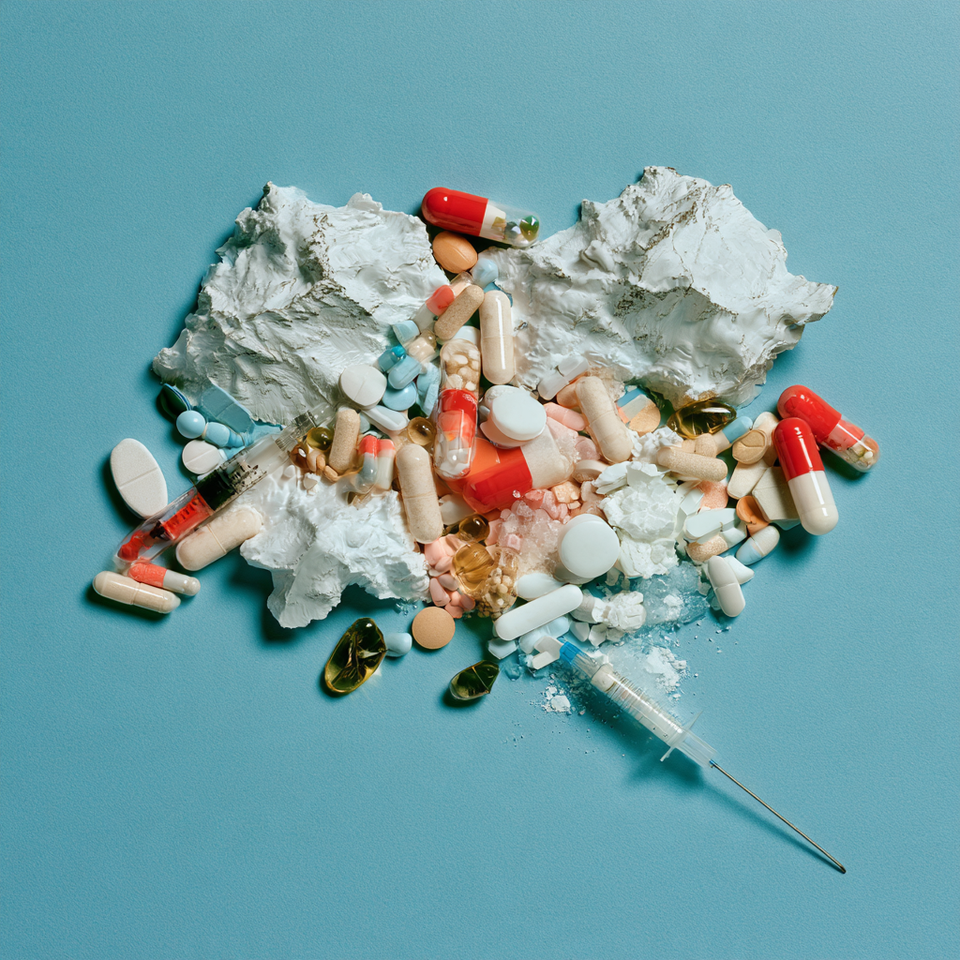
Opioids, stimulants for ADHD and certain sedatives are essential medicines. They are also open to misuse, diversion and dependence. That is why they are regulated by a separate legal framework on top of general medicines law, with stricter rules for prescribing, storage and record-keeping.
As a pharmacist in Switzerland, I handle controlled substances regularly. This article explains how the Swiss framework works and why its documentation requirements are a model of accountability.
Controlled substances in Switzerland are regulated mainly by:
Swissmedic oversees controlled substances in the pharmaceutical trade, including licences for companies (Narcotics Act [BetmG], 1951), while the cantons supervise pharmacies, doctors and hospitals (BetmG, 1951).
The directory sorts substances into lists that determine how strictly they are controlled. In simplified terms (Ordinance of the FDHA on the Lists of Narcotics [BetmVV-EDI], 2011):
The list determines the type of prescription required and the documentation the pharmacy must keep. Checking the list status of a product is therefore the first step for any controlled substance.
For list a substances, prescriptions must be written on an official narcotics prescription form (Narcotics Control Ordinance [BetmKV], 2011). The prescription must contain the patient details, the substance, the dose, the dosage instructions and the prescriber's signature.
The quantity is generally limited to a supply for one month. The prescriber can extend this to up to three months when there is a justified reason stated on the prescription (BetmKV, 2011).
At dispensing, the pharmacist checks the form carefully: completeness, validity, plausibility of the dose and consistency with the patient's history. Any doubt is clarified with the prescriber before dispensing.
Controlled substances must be stored securely, protected from unauthorised access. In practice, list a products are kept locked and separate from other stock, with access limited to authorised staff (BetmKV, 2011).
Secure storage is not only about theft by outsiders. Clear access rules also protect staff and make any discrepancy easier to investigate.
The core of the system is accountability. For list a substances, the pharmacy keeps records of every movement:
Regular reconciliation compares the recorded balance with the physical stock. Any discrepancy must be investigated and documented. Records are kept for the legally required period and must be available to the cantonal authorities on request (BetmKV, 2011).
The destruction of expired or returned controlled substances is also documented, so that nothing disappears from the record without explanation.
Controlled substance regulation is not only about preventing diversion. It is also about protecting patients from harm.
In daily practice, that means:
Pharmaceutical companies that manufacture, import, export or distribute controlled substances need specific licences and permits. Their warehouses apply the same principles at larger scale: restricted access, reconciliation, documented destruction and full traceability.
Quality assurance and logistics teams play a key role here. A small discrepancy in a controlled substance inventory can trigger a formal investigation and reporting to the authorities.
Controlled substances show regulated documentation at its most demanding. Every unit must be traceable, every discrepancy explained, and every record available for inspection.
My experience handling controlled substances in Swiss pharmacies, together with years of prescription and inventory control in hospital and community settings, has made this level of accountability routine for me. It transfers directly to quality, logistics and compliance roles in industry.
Narcotics Act [BetmG] of 3 October 1951, SR 812.121 (Switzerland). https://www.fedlex.admin.ch
Narcotics Control Ordinance [BetmKV] of 25 May 2011, SR 812.121.1 (Switzerland). https://www.fedlex.admin.ch
Ordinance of the FDHA on the Lists of Narcotics, Psychotropic Substances, Precursors and Auxiliary Chemicals [BetmVV-EDI] of 30 May 2011, SR 812.121.11 (Switzerland). https://www.fedlex.admin.ch
Park, T. W., Saitz, R., Ganoczy, D., Ilgen, M. A., & Bohnert, A. S. B. (2015). Benzodiazepine prescribing patterns and deaths from drug overdose among US veterans receiving opioid analgesics: Case-cohort study. BMJ, 350, h2698. https://doi.org/10.1136/bmj.h2698

Member discussion